
The first week after delivery can feel full, emotional, and a little overwhelming. You are learning your baby’s cues while trying to rest, heal, and settle into a new rhythm at home.
This first-week newborn care checklist helps you keep the basics organized. Use it to track feeding, diapers, safe sleep, umbilical cord care, your baby’s first doctor visit, and your own recovery.
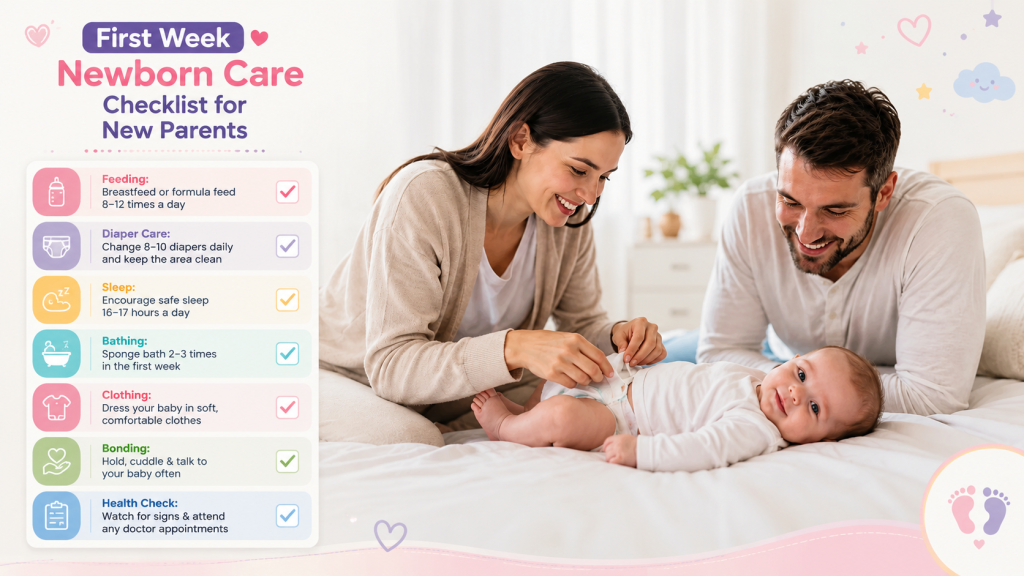
First Week Newborn Care at a Glance
Use this quick checklist to stay focused during the first week at home:
- Feeding: Track feeding times and watch for hunger cues.
- Wet diapers: Count wet diapers and note stool changes.
- Safe sleep: Place your baby on their back for every sleep.
- Umbilical cord care: Keep the cord stump clean and dry.
- First pediatrician visit: Bring feeding notes, diaper notes, and hospital papers.
- Parent recovery: Rest, eat, drink water, and ask for help.
Before You Leave the Hospital
Before you head home, make sure you have the key details your baby’s doctor may need. Keep everything in one folder or phone note.
- Hospital discharge papers
- Baby’s discharge weight
- Feeding notes from the hospital team
- Newborn screening and hearing test details
- First pediatrician appointment date
- Emergency contact number
- Rear-facing car seat ready for travel
- Parent recovery instructions from your care team
Daily Newborn Care Checklist for the First Week
During the first week, focus on feeding, diapers, safe sleep, and cord care.
Feeding and Wet Diapers
Feed your baby often during the first week, day and night. Watch for hunger signs like rooting, sucking motions, or bringing hands to the mouth.
Track feeding times so you can spot patterns and share clear notes with your pediatrician. Note any latch trouble, bottle refusal, weak sucking, or long, sleepy feeds.
Count wet diapers each day and track dirty diapers, too. Watch stool changes, and call the pediatrician if feeding feels poor or diaper counts seem low.
Safe Sleep
Place your baby on their back for every sleep. Use a firm, flat sleep surface with no pillows, blankets, toys, bumpers, or loose bedding.
Share a room with your baby, but do not share a bed. Keep the room comfortable, and avoid overheating with heavy layers.
If your baby falls asleep in a swing, car seat, or carrier, move them to a safe sleep space as soon as you can.
Umbilical Cord and First Bath
Keep the umbilical cord stump clean and dry. Fold the diaper below the stump so the area gets air and stays free from rubbing.
Avoid lotions, powders, oils, or other products on the cord. Use sponge baths until the cord heals and your pediatrician says regular baths are okay.
Watch for redness, swelling, bad smell, discharge, or bleeding. Call the pediatrician if the area looks wrong or your baby seems unwell.
First Pediatrician Visit Checklist
Your baby’s first pediatrician visit helps check feeding, weight, diaper output, and early newborn health. Bring simple notes so you do not have to remember everything while tired.
Take these items and questions with you:
- Hospital papers
- Baby’s discharge weight
- Feeding notes
- Wet diaper notes
- Dirty diaper notes
- Umbilical cord care questions
- Safe sleep questions
- Jaundice concerns
- Newborn screening questions
- Any parent questions or worries
Write questions down before the visit. Small details can help your pediatrician guide you with more confidence.
Newborn Reflexes and First-Week Changes
Newborns can make small movements and sounds that surprise new parents. You may notice rooting, sucking, startle movements, tight fists, jerky sleep motions, soft spots, and skin changes.
Mild yellowing of the skin or eyes can also happen in the first week. Call your pediatrician if something feels wrong or your baby seems unwell.
Simple First 7 Days Tracker
A simple tracker can help you share clear notes with your pediatrician.
What to Track | Quick Note |
Feeding times | Time, amount, or nursing side |
Wet diapers | Count each day |
Dirty diapers | Note color and changes |
Sleep notes | Short stretches or long sleepy periods |
Cord check | Dry, clean, or any concern |
Questions | Save notes for the pediatrician |
What Can Wait Until Later
The first week does not need to look perfect. Focus on feeding, safe sleep, diaper tracking, cord care, and parent recovery.
A perfect sleep routine, strict feeding schedule, finished nursery, long outings, extra visitors, and non-urgent baby gear can wait.
Go one day at a time. Small, steady care matters more than a perfect plan.
When to Call a Healthcare Provider
Call your pediatrician or healthcare provider if you notice any concern that feels urgent or unusual.
Call if your baby:
- Has trouble feeding
- Has fewer wet diapers than expected
- Has a fever or temperature concern
- Has yellow skin or yellow eyes
- Has trouble breathing
- Has blue color around the lips or face
- Has a cord area that looks red, swollen, smelly, or bleeding
- Seems very hard to wake
You know your baby best. This blog gives general education only and does not replace medical advice.
Need Extra Help During the First Week?
Some families want calm, practical help after delivery, especially during the first few nights at home.
Rock A Bye Baby LLC offers newborn care services for families who need support at home. Parents can reach out when they need steady support during the early newborn days.
Frequently Asked Questions
What should I track during the first week with a newborn?
Track feeding times, wet diapers, dirty diapers, sleep notes, cord healing, and questions for your pediatrician.
How soon should my newborn see a pediatrician?
Many newborns have an early checkup within a few days after birth or discharge. Follow your hospital or pediatrician’s guidance.
What matters most during the first week at home?
Focus on feeding, safe sleep, diaper tracking, cord care, doctor follow-up, parent recovery, and asking for help.
References
- American Academy of Pediatrics / HealthyChildren.org
- Centers for Disease Control and Prevention
- MedlinePlus