Bathing a newborn can feel intimidating the first few times. Your baby is small, slippery when wet, and still needs full head and neck support.
The good news is that newborn baths can stay simple. Start with sponge baths while the umbilical cord area heals, prepare everything before you begin, and keep safety more important than creating a perfect bath routine.
When Should You Bathe a Newborn at Home?
Newborns Do Not Need a Bath Every Day
A daily bath is usually unnecessary for a newborn.
The American Academy of Pediatrics notes that bathing about three times a week during the first year may be enough when the diaper area is cleaned well between baths. The American Academy of Dermatology similarly recommends bathing newborns about two to three times per week. Bathing too often can contribute to dry skin.
Your baby’s needs may vary. Clean the diaper area during changes and gently clean other areas when milk, spit-up, or moisture collects.
Choose a Calm Time
Try bathing your baby when you are not rushed, and your baby is relatively settled.
You do not need to make bath time happen at the same hour every day. During the early weeks, comfort, feeding, and your baby’s individual rhythm can guide the timing.
Start With Sponge Baths While the Cord Heals
The AAP and American Academy of Dermatology recommend sponge baths until the umbilical cord stump has fallen off and the area has healed.
A sponge bath lets you clean your baby without placing them in a tub of water.
If you are still organizing other early-care routines, our First Week Newborn Care Checklist for New Parents also covers feeding, diapers, safe sleep, cord care, and pediatric follow-up.
Prepare Everything Before the Sponge Bath
Do not start the bath and then leave your baby to find something.
Gather supplies first:
- A basin of lukewarm water
- A soft washcloth
- A clean towel
- A fresh diaper
- Clean clothes
- Mild, fragrance-free baby cleanser, if needed
- Any skin product recommended for your baby
Place everything within easy reach.
Choose a stable, comfortable surface. If your baby is above floor level, keep one hand on them to prevent a fall. The AAP emphasizes keeping direct supervision throughout bathing.
How to Give a Newborn a Sponge Bath
Keep Your Baby Warm
Newborns can become cold quickly when undressed.
Wrap your baby in a dry towel and uncover only the area you are washing. Keep the room comfortably warm and work gently rather than extending bath time.
Clean One Area at a Time
You can follow a simple order:
- Gently wipe the face.
- Clean around the neck and behind the ears.
- Wipe the chest, arms, hands, legs, and feet.
- Pay attention to skin folds.
- Clean the diaper area last.
Use gentle movements rather than scrubbing.
The AAD recommends lukewarm water and mild, fragrance-free baby products when cleanser is needed.
When Can Your Baby Have the First Tub Bath?
Once the umbilical cord stump has fallen off and the area has healed, parents can generally begin a regular infant bath.
The first tub bath does not need to be long. If your baby seems uncomfortable, you can return to sponge baths temporarily and try again later.
If you are unsure whether the cord area has healed enough for a tub bath, ask your pediatrician.
Set Up the First Tub Bath Safely
Prepare the Water Before the Baby Goes In
Use lukewarm water rather than hot water.
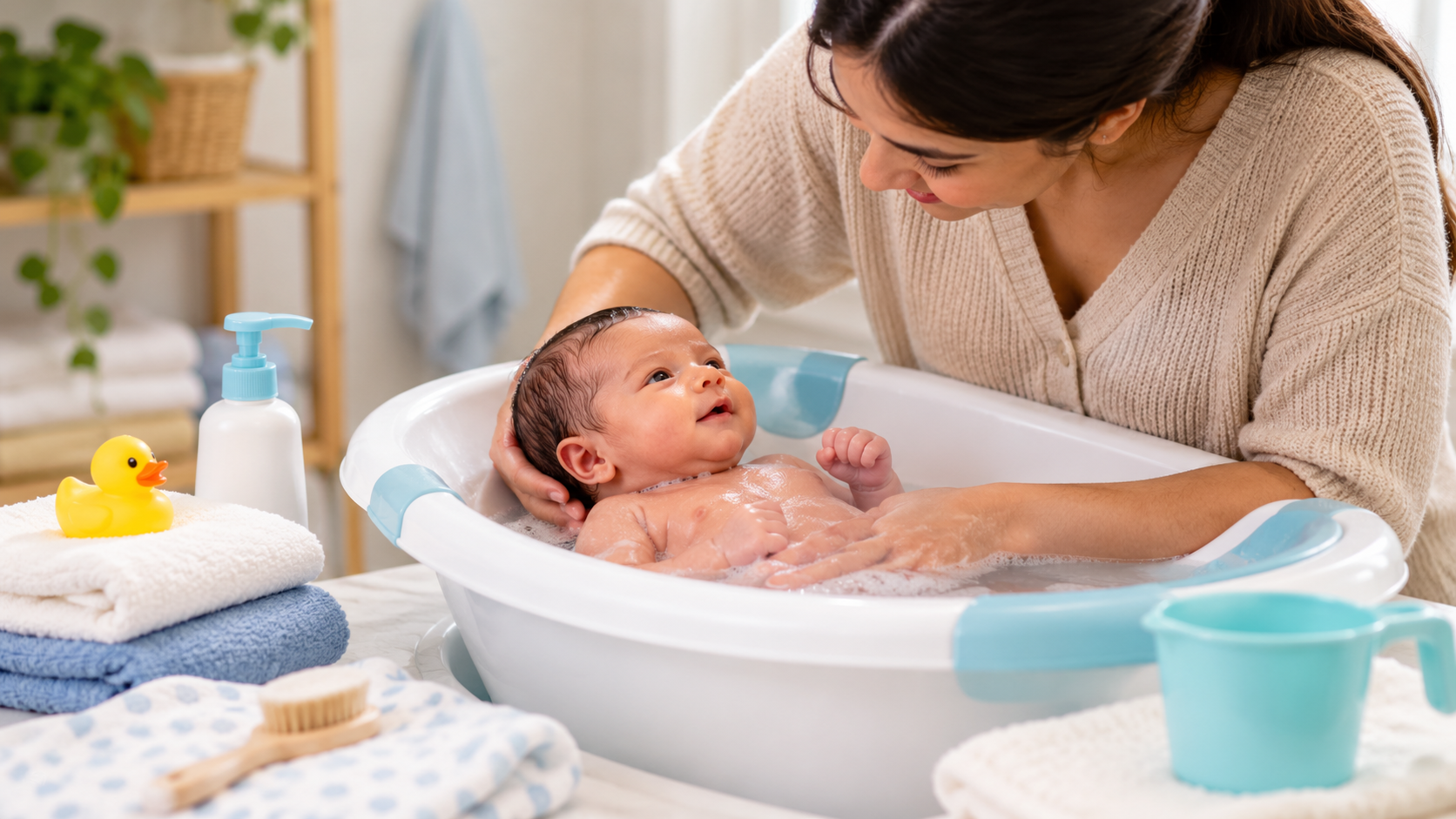
The AAP recommends filling the infant bath before placing the baby in it and checking the water with the inside of your wrist or elbow. It also advises keeping household hot-water settings at no more than 120°F to reduce scald risk.
Keep the faucet off while your baby is in the water.
Keep One Hand Supporting Your Baby
Lower your baby gently into the water feet first while supporting the head and neck.
Keep most of the baby’s body above the water and maintain direct physical supervision. Never leave a newborn alone in a bath, even briefly.
If you forgot a towel, diaper, or another item, take your baby with you rather than stepping away.
Keep Newborn Skin Care Simple
Use Cleanser Sparingly
Newborn skin can be sensitive.
You usually do not need large amounts of soap. Choose a mild, fragrance-free cleanser when one is needed, and rinse it from the skin gently.
The AAP notes that frequent bathing and excessive soap use may dry a baby’s skin.
Pay Attention to Skin Folds
Milk, moisture, and spit-up can collect in areas such as:
- Around the neck
- Behind the ears
- Under the arms
- Between fingers and toes
- Around the diaper area
Clean these areas gently and dry them carefully afterward.
Dry and Dress Your Baby Right Away
Have a towel ready before the bath begins.
When bath time ends, lift your baby carefully and wrap them promptly. Pat the skin dry instead of rubbing.
If your baby’s skin becomes dry, the AAD recommends considering a fragrance-free moisturizer and reducing bath frequency when appropriate.
Use products recommended for infants, and ask your baby’s healthcare provider about persistent or concerning skin problems.
When to Ask a Healthcare Provider About Skin or Cord Concerns
Newborn skin can change during the early weeks, and not every rash or dry patch has the same cause.
Contact your pediatrician or healthcare provider if you notice a skin problem that is worsening, spreading, painful-looking, or accompanied by signs that your baby is unwell.
Also ask for medical guidance if the umbilical cord area looks concerning or is not healing as expected.
Avoid trying to diagnose or treat a newborn skin condition based only on photos or general advice online.
Quick Newborn Bathing Checklist
- Gather all supplies before starting.
- Begin with sponge baths while the cord stump heals.
- Keep your baby warm.
- Use lukewarm water.
- Support the head and neck.
- Keep one hand on your baby.
- Never leave your baby alone in water.
- Use mild products only when needed.
- Clean skin folds gently.
- Pat the skin dry after bathing.
- Dress your baby promptly.
- Ask a healthcare provider about concerning skin or cord changes.
Frequently Asked Questions
How often should I bathe my newborn?
Many newborns only need about two or three baths per week when the diaper area is cleaned thoroughly between baths.
Should I sponge bathe my baby before the cord falls off?
Yes. Pediatric and dermatology guidance recommends sponge baths until the umbilical cord stump falls off and the area heals.
What temperature should newborn bath water be?
Use comfortably lukewarm water, not hot water. Test it before placing your baby in the bath.
What if my newborn cries during the first tub bath?
Some newborns need time to adjust. Keep the bath gentle and brief. You can return to sponge baths for a while and try a tub bath again later.
Let Bath Time Become Familiar With Practice
Your first newborn bath does not need to look perfect. Prepare your supplies, keep your baby supported, work slowly, and focus on safety.
Families who are still learning bathing, diapering, feeding, and other everyday routines can also explore newborn care guidance for new parents as a broader source of practical, non-medical support at home.